Ecological Paradox: Military Devastation and the Rescue of Orchid Meadows
The narrative of Babiny I would be purely a tragic story of human destruction were it not for its fascinating ecological conclusion. While the military area represented absolute devastation from the perspective of architecture and demography, for the local biosphere it paradoxically meant salvation from the threat of modernisation. The deforestation of slopes by medieval colonists and centuries of regular, extensive mowing created a unique treeless habitat. As early as 1904, these so-called “orchid meadows” were studied and praised in the renowned work České středohoří by Charles University professor and botanist Karel Domin (Domin, 1904; Pištěk, 2006).
In the first half of the 20th century, however, biodiversity began to collapse due to agricultural intensification, the use of artificial fertilisers, and insensitive grazing (Pištěk, 2006; AOPK ČR, 2024). Many rare orchid species disappeared. The expulsion of the population and the creation of the military zone halted this trend. Isolation from chemical agriculture and human exploitation meant that a fragment of the original meadow area survived. After the army withdrew, the remaining valuable area was promptly protected; on 13 December 1993, the Babinské louky Nature Monument was officially declared over an area of nearly 41 hectares (40.89 ha) (Pištěk, 2006; AOPK ČR, 2024).
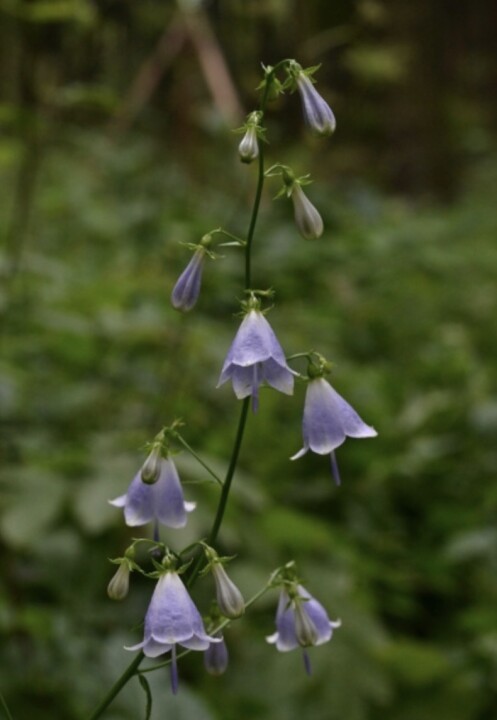
The jewel of this protected area, granting it national and even European significance, is the critically endangered plant Adenophora liliifolia (Pištěk, 2006; AOPK ČR, 2024). Babinské louky host one of only five known sites of this species in the entire Czech Republic. Its uniqueness lies in the fact that, uniquely in the country, it grows here directly in open meadow communities rather than only in shaded forest environments. In 2000, conservationists recorded more than 160 exceptionally vigorous individuals (AOPK ČR, 2024).
However, Adenophora liliifolia is highly sensitive in terms of ecological tolerance. It cannot survive in fully closed, shaded vegetation. Paradoxically, if the site were left to natural succession—spontaneous overgrowth—it would quickly disappear under the pressure of shrubs and aggressive grasses (AOPK ČR, 2024). In order for nature to survive, human activity must simulate the practices of the vanished Sudeten mountain farmers. Therefore, since 2001, specialised conservation management has been carried out: meadows must be regularly mown by hand at the end of summer, the cut biomass must be removed (thus reducing soil nutrients, which suits orchids and Adenophora), and shrubs must be continuously cleared (AOPK ČR, 2024). Additionally, mowing must be carried out in a mosaic pattern, with some plots left unmown in alternating years to provide refuge for insects and allow plants to set seed (AOPK ČR, 2024).
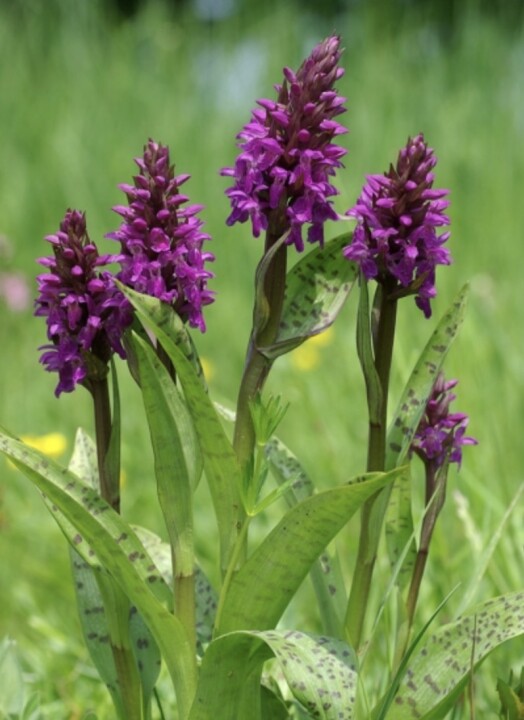
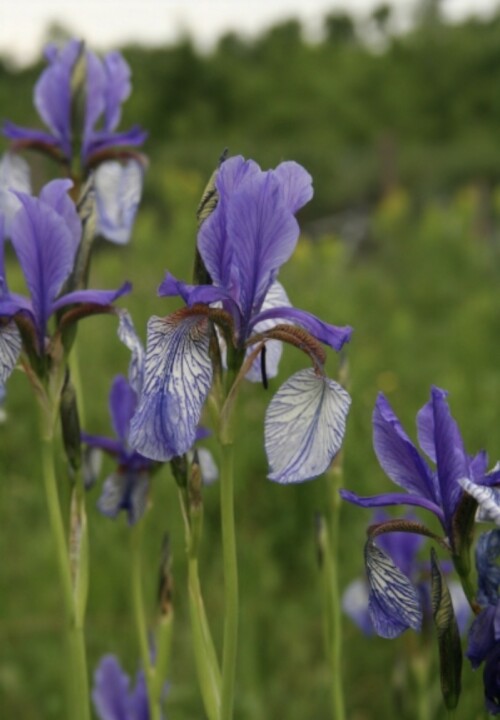
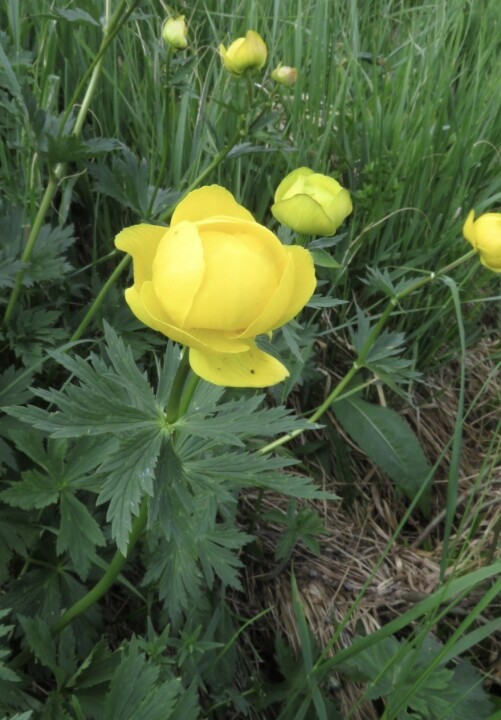
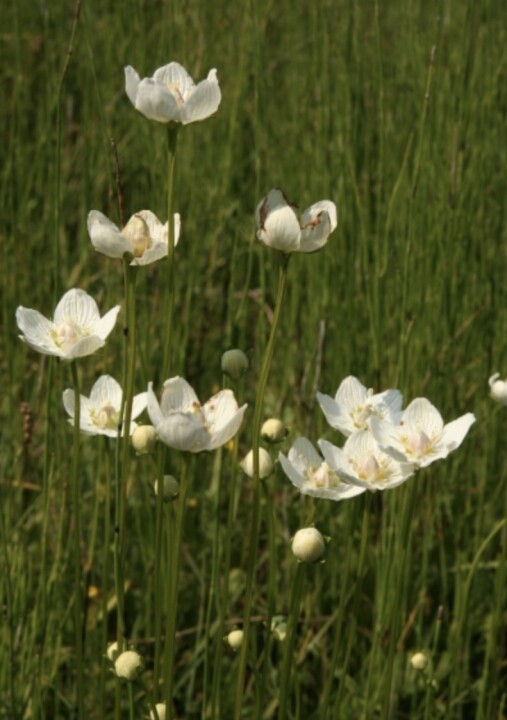
The flora of the reserve is astonishing. Early spring colours the meadows white with carpets of spring snowflakes (Leucojum vernum) and yellow with primroses and marsh marigolds. With the arrival of May, a display of protected species begins: the orchid Dactylorhiza majalis blooms abundantly, alongside Iris sibirica, the bright yellow Trollius altissimus, and the highly endangered Parnassia palustris (AOPK ČR, 2024; Horáčková, 2021).
The environmental quality of the area has also been confirmed in its fauna. A detailed malacological survey conducted in 2021 in the spring areas and wet meadows along the upper course of the Rytina stream (for example at the northern edge of the reserve in soft floodplain woodland with willows and dense stands of butterbur) revealed remarkable species richness. Researchers recorded 40 species of molluscs (36 terrestrial snails, 2 aquatic, and 2 bivalves), representing an extraordinary 16% of all malacological species recorded in the Czech Republic and 24% of those in the Central Bohemian Uplands (Horáčková, 2021).
An interesting feature that closes the circle between military history and nature conservation is the modern management of disturbed soils. Some protected organisms, such as the small prehistoric crustacean Triops cancriformis, depend on rutted, temporarily flooded puddles previously created by military vehicles. The administration of the České středohoří Protected Landscape Area therefore adopted a highly innovative (and initially controversial) approach. On an area of approximately 18 hectares of the former training ground, it allowed legal, organised off-road driving. Enthusiasts with heavy off-road vehicles, under the supervision of conservation officers, intentionally disturb the soil, thereby maintaining habitat conditions and simulating historical military disturbance, protecting endangered fauna from extinction (Wild Hogs Babiny, 2014).
The following photos of flowering plants in the Babinské louky Nature Reserve are taken from www.pladias.cz